The Mistake of Thinking Retirement Planning Is Only About Investing
Financial Horizons: Insights for Building Wealth and Securing Your Legacy
The Mistake of Thinking Retirement Planning Is Only About Investing
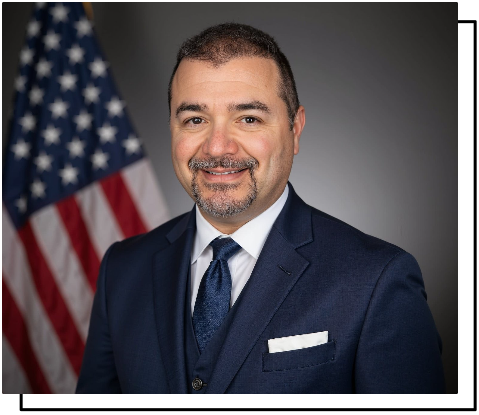
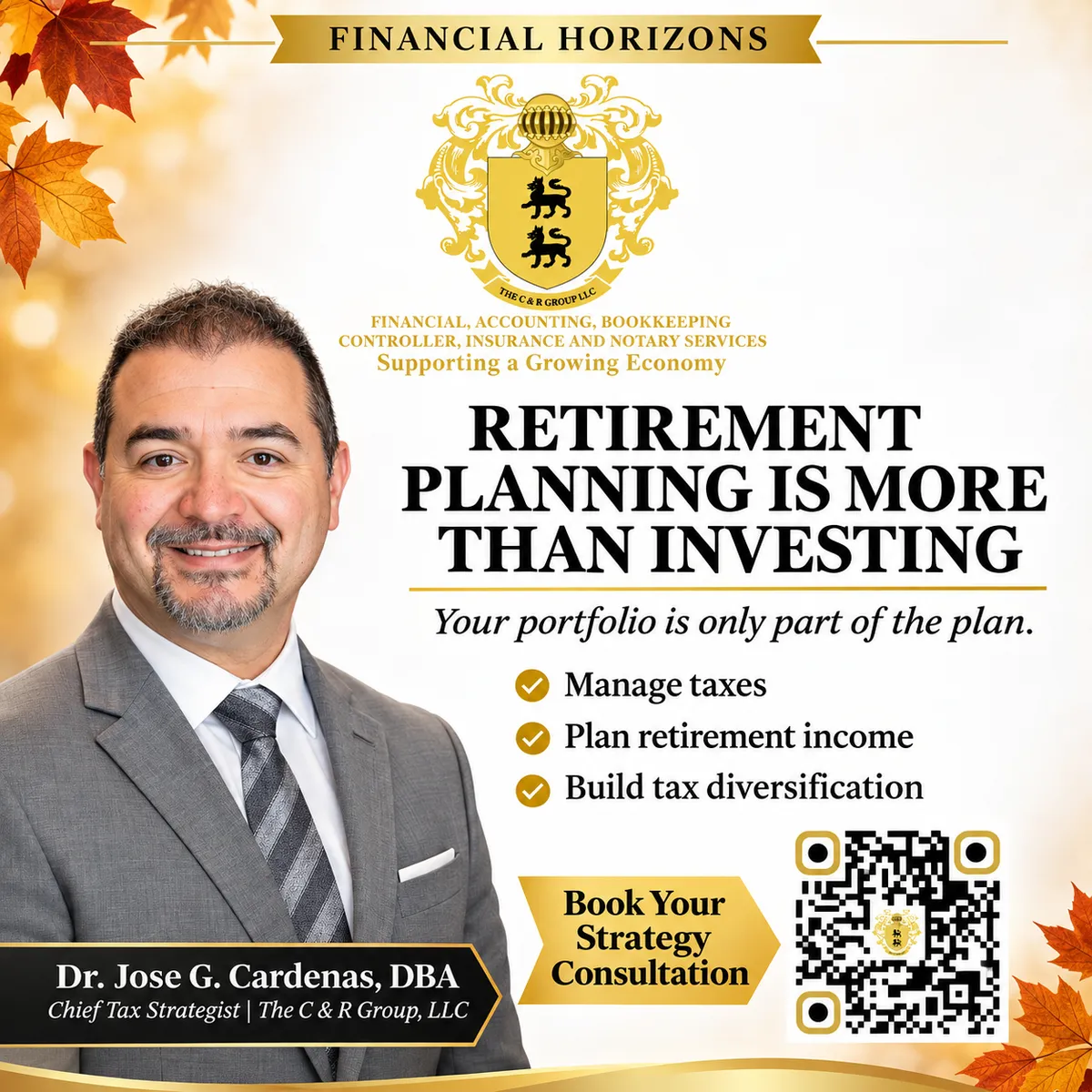
By Dr. Jose G. Cardenas | Chief Tax Strategist, The C & R Group, LLC
When most people hear the words retirement planning, they think about investments.
Stocks.
Bonds.
Mutual funds.
Target-date funds.
Rates of return.
Those things matter.
But they are only part of the picture.
A retirement account can grow for decades and still create a poor retirement outcome if the owner has not planned for:
taxes,
income needs,
withdrawal strategy,
required distributions,
healthcare costs,
legacy goals,
and liquidity.
That is why retirement planning should never be treated as an investing-only exercise.
Your portfolio helps build the money. Your retirement strategy determines how that money works once the paycheck stops.
Investing Answers Only One Question
Investment planning mainly answers:
“How should my money grow?”
Retirement planning asks much more.
How much income will I need?
Which accounts will I draw from first?
Which withdrawals will be taxable?
How will Social Security fit into the picture?
Will I have pension income?
How much should remain liquid?
How will taxes affect net retirement income?
What happens when required minimum distributions begin?
How much do I want to leave to my family?
Those are not investment-selection questions.
They are retirement-income questions.
And the difference matters.
Taxes Can Change the Value of Retirement Income
Imagine two retirees each have:
$1 million in retirement assets.
At first glance, their financial positions may look identical.
But suppose one person has most of the money in Traditional retirement accounts.
The other has a mix of:
Traditional,
Roth,
and taxable assets.
Those two retirees may have very different levels of control over taxable income.
Traditional retirement withdrawals are generally taxable when distributed, while qualified Roth distributions can generally be excluded from gross income.
That means the account balance alone does not tell you how much spendable income you really have.
You need to understand the tax treatment of the money.
Tax Diversification Matters
This is why I talk so much about tax diversification.
Most people understand investment diversification.
Do not put everything in one stock.
Do not rely on one asset class.
But many households spend decades building almost all of their retirement wealth inside accounts that may ultimately be taxed the same way.
That creates another form of concentration risk:
tax concentration.
Having access to different tax buckets can create more flexibility.
Traditional retirement assets may provide tax benefits during the working years.
Roth assets may provide qualified tax-free withdrawals later.
Taxable accounts may provide liquidity and different capital-gain treatment.
The purpose is not to make every account equal.
The purpose is to avoid arriving at retirement with only one tax option.
Required Minimum Distributions Can Change the Plan
Another reason retirement planning is bigger than investing is that you may eventually lose some control over how much money leaves certain retirement accounts.
Under current rules, required minimum distributions generally apply to Traditional IRAs and many employer retirement plans beginning at the applicable required age. The IRS currently states that these withdrawals generally begin at age 73, subject to specific rules and later-start provisions for certain workplace-plan participants.
Those withdrawals generally become part of taxable income.
That can affect:
your tax bracket,
Medicare-related income calculations,
the taxation of other income,
and how much cash you actually keep.
By contrast, Roth IRAs and designated Roth workplace accounts are not subject to lifetime RMDs for the original owner under current rules.
That makes account structure important long before retirement begins.
Retirement Income Is a Cash-Flow Problem
The next mistake is assuming a large account balance automatically produces a comfortable retirement.
It does not.
You still need a withdrawal plan.
Suppose your household needs:
$8,000 per month
to maintain your lifestyle.
Where does that money come from?
Maybe:
Social Security covers $3,000.
A pension provides $2,500.
That still leaves:
$2,500 per month
that must come from somewhere else.
Now the retirement accounts become an income system.
Which account should fund the difference?
How much tax does the withdrawal create?
Do you withdraw monthly?
Annually?
Do you use taxable assets first?
Traditional assets?
Roth assets?
Those decisions can matter just as much as investment performance.
A Quick Example
Consider Robert and Linda.
They have accumulated:
$1.4 million
for retirement.
Most of it is inside Traditional retirement accounts.
They are proud of what they built—and they should be.
But when they begin retirement-income planning, they discover something important.
Their portfolio is diversified.
Their tax structure is not.
They expect:
Social Security,
a pension,
and Traditional retirement withdrawals.
All three may contribute to taxable household income.
Their retirement plan therefore needs to answer more than:
“What should we invest in?”
It must also consider:
withdrawal sequencing,
possible Roth strategies,
tax brackets,
required distributions,
cash reserves,
and the income needed for lifestyle expenses.
The investment portfolio is still important.
But it is now only one part of the retirement system.
Retirement Planning Also Includes Protection
There is another area investors sometimes overlook:
risk that has nothing to do with the stock market.
What happens if one spouse dies early?
What happens if long-term care is needed?
What happens if retirement begins during a major market decline?
What happens if a large emergency occurs during the first few years of retirement?
What happens if inflation remains elevated longer than expected?
A complete retirement plan considers those risks too.
That may include:
cash reserves,
insurance planning,
income guarantees where appropriate,
estate coordination,
and contingency planning.
Again, none of those decisions is solved by simply choosing a mutual fund.
Your Retirement Accounts Need Jobs
One useful way to think about retirement planning is to give each account a mission.
One account may provide current income.
Another may provide future tax-free income.
Another may serve as an emergency reserve.
Another may be positioned for long-term growth.
Another may be intended primarily for legacy.
Once each account has a role, investment decisions become easier to evaluate.
The question changes from:
“Which investment has the highest return?”
to:
“What job is this money supposed to perform?”
That is a much more strategic question.
Your Five Retirement Planning Questions
Before focusing on investment returns alone, ask:
Where will monthly retirement income actually come from?
Which retirement accounts will create taxable income?
Do you have enough tax diversification between Traditional, Roth, and other assets?
How will required distributions affect future income and taxes?
What risks could disrupt the retirement plan even if the investments perform well?
If those questions are unanswered, the retirement strategy is incomplete.
Final Thought
A retirement portfolio is not the same thing as a retirement plan.
Investments help determine how your assets grow.
But taxes determine how much you keep.
Income strategy determines how the money reaches you.
Cash reserves determine how much flexibility you have.
Protection planning helps defend the strategy.
And estate planning helps determine what happens after you are gone.
Retirement planning is not simply about accumulating the largest account balance. It is about turning accumulated wealth into dependable, tax-efficient, flexible income.
Do not stop at investing.
Build the entire retirement system.
Book Your Retirement Tax Strategy Consultation
If most of your retirement planning has focused on investments—but you have not yet coordinated taxes, withdrawal strategy, required distributions, cash flow, and long-term income—now is the time to build the bigger picture.
We can review your Traditional and Roth accounts, pensions, Social Security expectations, projected retirement income, tax exposure, liquidity, and legacy goals as part of one coordinated retirement strategy.
Booking link:
https://api.leadconnectorhq.com/widget/booking/T4UHUjCijCtIB3rwoTDI
Phone: 580-699-1591
Booking your appointment now:

ABOUT THE AUTHOR
Dr. Jose G. Cardenas is a retired U.S. Army Finance Officer and the Chief Tax Strategist at The C & R Group, LLC. With a Doctorate in Business Administration and over 20 years of experience in tax planning and financial strategy, Dr. Cardenas helps individuals and business owners legally reduce taxes, strengthen cash flow, and build lasting wealth and legacy. Learn more at www.thecrgroupllc.com
DISCLOSURE
This article is for educational and informational purposes only and is not intended to serve as personalized legal, tax, or investment advice. Tax laws and regulations change over time and may vary by jurisdiction. You should consult with a qualified tax professional regarding your specific circumstances before implementing any strategy discussed here. Dr. Jose G. Cardenas, DBA, provides tax advisory services through The C & R Group, LLC. Insurance and investment strategies may be offered through his role as a licensed financial professional affiliated with Experior Financial Group.