Year-End Retirement Strategy Checklist
Financial Horizons: Insights for Building Wealth and Securing Your Legacy
Year-End Retirement Strategy Checklist
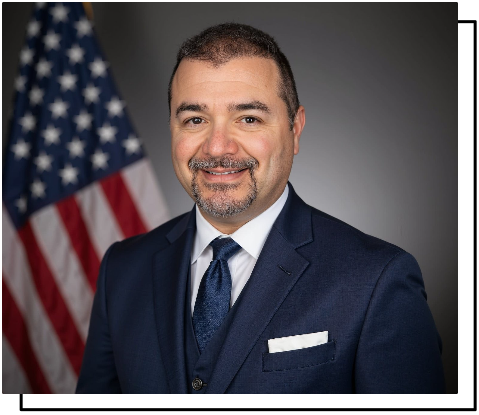
By Dr. Jose G. Cardenas | Chief Tax Strategist, The C & R Group, LLC
By November, retirement planning should move from theory to decisions.
There are only so many paychecks left.
Business owners have a clearer picture of annual profit.
Bonuses may already be known.
Investment gains are easier to estimate.
And households can finally see whether the year turned out the way they expected.
That makes this an ideal time to ask one simple question:
Is my retirement strategy helping both my future and my current financial plan?
Retirement planning at year-end should not be about blindly maximizing contributions.
It should be about making sure the money, tax treatment, cash flow, and long-term strategy are working together.
Start With What You Have Already Done
Before changing anything, determine where you stand.
How much have you already contributed?
Are those contributions Traditional, Roth, or both?
Have you captured the full employer match?
Do you have unused contribution room?
For 2026, the employee elective-deferral limit for most 401(k), 403(b), governmental 457(b), and TSP plans is $24,500. Eligible participants age 50 or older may generally contribute an additional $8,000, while those who are age 60 through 63 during 2026 may qualify for the higher $11,250 catch-up amount.
Those numbers tell you what may be available.
They do not tell you what you should do.
That comes next.
Decide Whether the Next Dollar Should Be Traditional or Roth
This week we discussed one of the biggest retirement mistakes:
Treating Traditional versus Roth like a competition.
They serve different purposes.
Traditional contributions can provide current tax relief.
Roth contributions generally require you to pay tax today in exchange for the potential for qualified tax-free withdrawals later.
So ask:
Is this an unusually high-income year?
Traditional may deserve more attention.
Is this a temporarily lower-income year?
Roth may become more attractive.
Do I already have most of my retirement wealth in tax-deferred accounts?
Adding Roth exposure may improve future flexibility.
Sometimes the right answer is not one or the other.
It is a combination.
Review the New 2026 Catch-Up Rule
For some higher-income employees, 2026 introduced another issue.
If prior-year wages from the employer sponsoring the plan exceeded $150,000, catch-up contributions in 2026 generally must be made on a Roth basis when the plan is subject to the new Roth catch-up requirement.
That matters because some employees who previously used Traditional catch-up contributions may no longer have that choice for the catch-up portion.
If you are 50 or older and making catch-up contributions, confirm how your employer is treating them.
Do not discover the answer after the final payroll of the year.
Business Owners Need a Separate Review
Business owners often have more moving parts.
A Solo 401(k), SEP IRA, SIMPLE plan, or other qualified retirement plan may offer different contribution structures and deadlines.
For 2026, the general defined-contribution plan limit is $72,000 before applicable catch-up contributions, subject to compensation limits and plan rules. The SEP maximum contribution is also generally capped at $72,000 for 2026, depending on eligible compensation and the applicable formula.
But the maximum is not the strategy.
A business owner also needs to ask:
Does the business have employees?
What contribution obligations apply?
How much Q1 cash does the business need?
How much can reasonably be committed to retirement?
A retirement contribution that creates a January cash-flow crisis is not a successful tax strategy.
Look Beyond the Contribution
This is where retirement planning becomes more strategic.
A contribution decision affects more than this year's tax return.
You should also review the tax structure of the retirement assets you already have.
How much is:
Traditional?
Roth?
Taxable?
Do you have enough liquidity outside retirement accounts?
Are most future withdrawals likely to be taxable?
Could required distributions eventually create unwanted taxable income?
Under current IRS rules, Traditional IRAs and many employer retirement plans are generally subject to required minimum distribution rules, while Roth IRAs and designated Roth accounts generally do not require lifetime withdrawals from the original owner.
That makes tax diversification important.
The objective is not necessarily to avoid tax.
It is to create more choices about where future income comes from.
Do Not Forget the Tax Reserve
Before sending another dollar into retirement, check the household tax reserve.
This is especially important if the year included:
a bonus,
business profit,
capital gains,
consulting income,
or other income without sufficient withholding.
A household may have plenty of contribution room and still need cash available for taxes.
Do not lock up the money and then borrow to pay the tax bill.
The sequence matters.
First understand the obligation.
Then decide how much additional cash can safely go toward retirement.
A Quick Example
Consider Jason and Emily.
They have strong incomes and approximately:
$18,000 of available year-end cash.
Jason still has room in his 401(k).
Emily wants to fund an IRA.
Their first instinct is to put all $18,000 into retirement.
Then they update the household tax projection.
They discover they still need approximately:
$7,000
to fully fund their expected tax obligation.
They also realize most of their retirement money is already in Traditional accounts.
So instead of simply maximizing deductions, they use a more balanced approach.
They fund the tax reserve.
Jason increases retirement contributions.
Part of the new retirement money goes toward Roth exposure.
And they preserve enough liquidity for normal household expenses.
They may not have created the largest possible deduction.
But they created the stronger financial plan.
That is the goal.
Your Year-End Retirement Review
Before the year closes, make sure you can answer these five questions:
How much contribution room do I still have?
Should the next dollar be Traditional, Roth, or a combination?
Have I fully captured any employer match or business retirement opportunity?
Is my tax reserve and emergency liquidity strong enough before I contribute more?
Am I building retirement assets with different tax treatments—or concentrating everything in one bucket?
If you can answer those five questions confidently, you are doing more than saving.
You are building strategy.
Final Thought
Retirement planning should not be measured only by how much you contributed.
A better year-end review asks:
Did the contribution improve the tax plan?
Did it support long-term wealth?
Did it preserve cash flow?
Did it create more flexibility?
Did it move the household closer to a retirement-income strategy?
The goal is not simply to put more money into retirement. The goal is to put the right money into the right tax bucket for the right reason.
That is the difference between saving for retirement and planning for retirement.
Book Your Year-End Retirement Tax Strategy Consultation
If you are unsure whether your remaining 2026 contributions should go Traditional, Roth, IRA, TSP, 401(k), SEP, or another retirement strategy, now is the time to review the full picture.
We can review your contribution room, projected income, tax exposure, current retirement balances, business profit, liquidity, and long-term retirement-income goals before year-end.
Booking link:
https://api.leadconnectorhq.com/widget/booking/T4UHUjCijCtIB3rwoTDI
Phone: 580-699-1591
Booking your appointment now:

ABOUT THE AUTHOR
Dr. Jose G. Cardenas is a retired U.S. Army Finance Officer and the Chief Tax Strategist at The C & R Group, LLC. With a Doctorate in Business Administration and over 20 years of experience in tax planning and financial strategy, Dr. Cardenas helps individuals and business owners legally reduce taxes, strengthen cash flow, and build lasting wealth and legacy. Learn more at www.thecrgroupllc.com
DISCLOSURE
This article is for educational and informational purposes only and is not intended to serve as personalized legal, tax, or investment advice. Tax laws and regulations change over time and may vary by jurisdiction. You should consult with a qualified tax professional regarding your specific circumstances before implementing any strategy discussed here. Dr. Jose G. Cardenas, DBA, provides tax advisory services through The C & R Group, LLC. Insurance and investment strategies may be offered through his role as a licensed financial professional affiliated with Experior Financial Group.